Tags: anxiety, checklist, depression, mental health
Overview
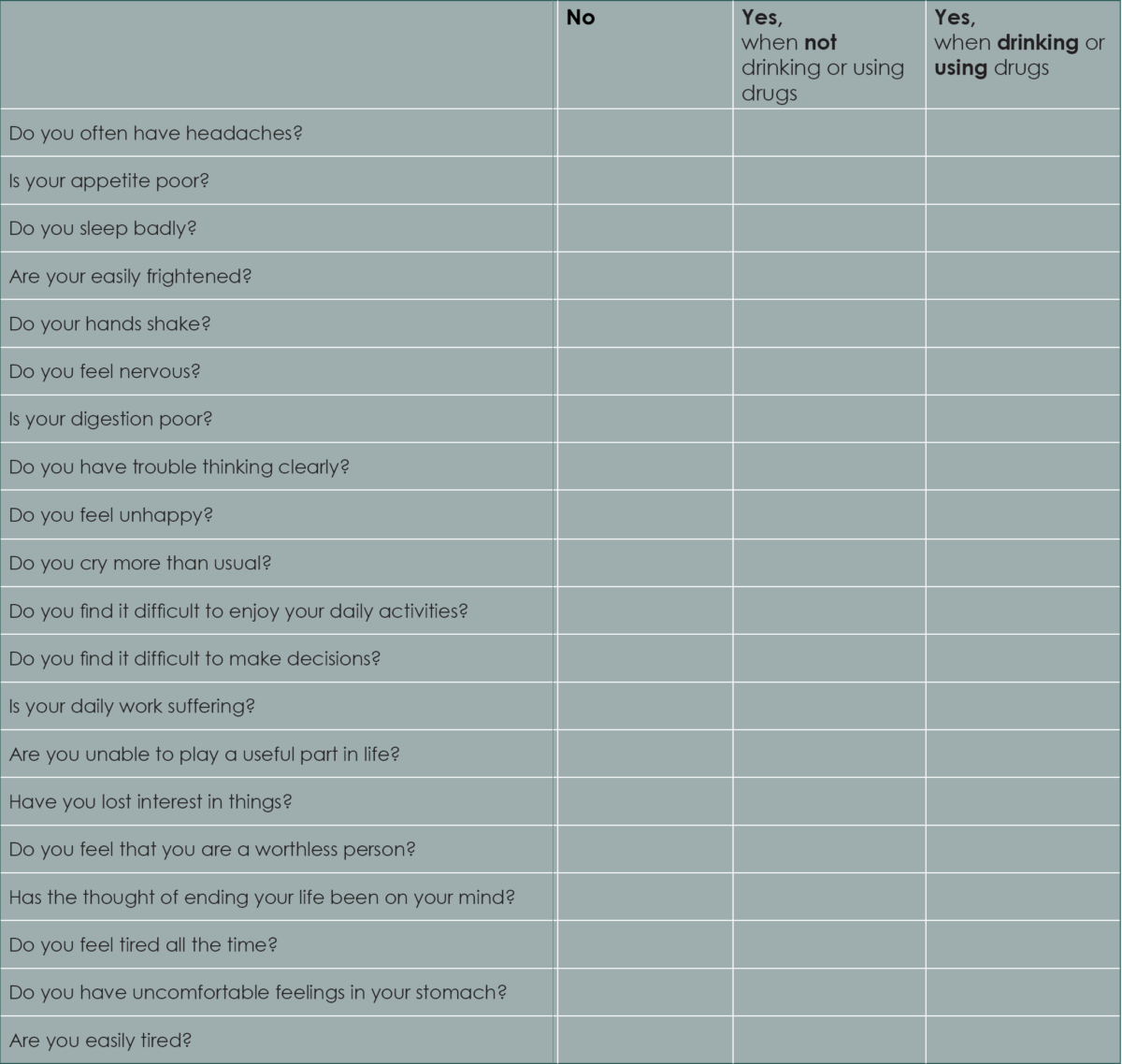
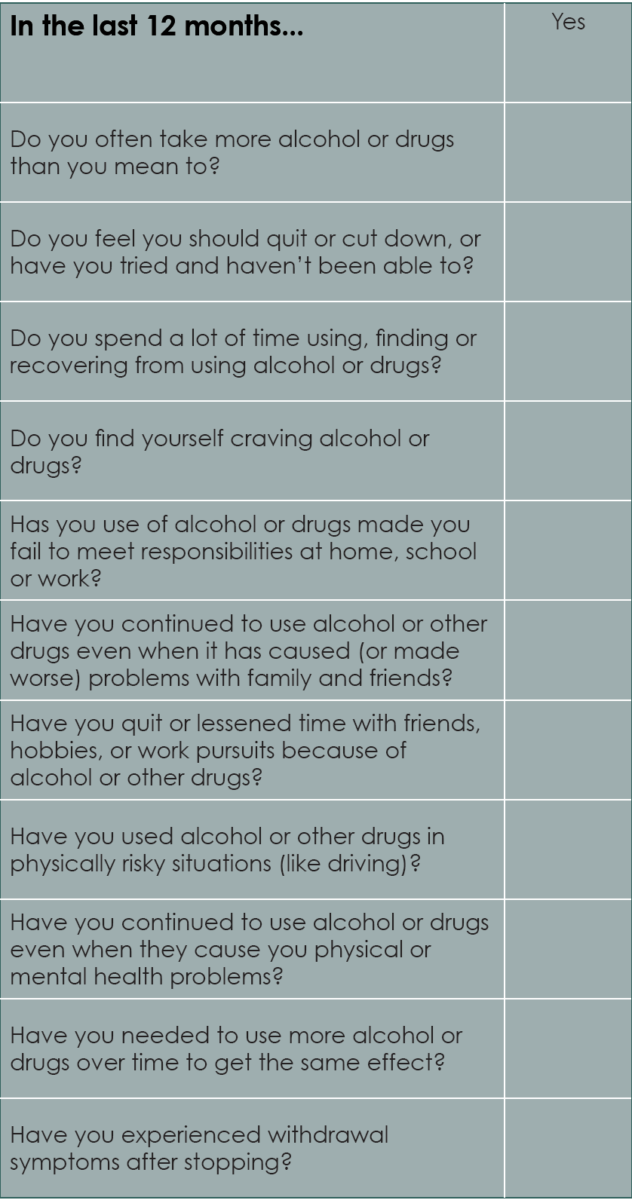
Does something not seem quite right? Are you worried about the way you or someone close to you in behaving? Check out the videos below and also scroll down to the factsheet containing a checklist to help you decide what you may need to do.

How to help your mates - R U OK
3:30 sec12/12/11
Simon Hogan Tells His Story
3:16 sec23/11/2011
Understanding Depression & Anxiety
4:42 sec2/11/11
Kellie's Story: Part 1 The Issue
5:24 sec25/7/2011
Kellie's Story: Part 2 What Can Help?
2:58 sec25/7/2011
Kellies Story: Part 3 Help is Out There
3:41 sec25/2/2011
What does a youth worker do?
3:30 sec11/5/2011
Getting help from a school counsellor
4:29 sec11/5/2011
What does a psychiatrist do?
5:40 sec11/5/2011
Getting help from a doctor if you're feeling down
6:09 sec11/5/2011
Someone Who Will Listen
2:23 sec6/1/2011
Your Are Not Alone
1:40 sec6/1/2011
Depression in the Family
3:21 sec01/05/2009
Understanding Depression & Anxiety
Featuring Ruby Rose - this video take a look at depression and anxiety. Depression is the most common mental health problem for young Australians. About one in every four people aged 12 to 25 will experience depression. Anxiety is distressing, and it can stop you achieving your full potential, but it can be treated. Visit http://www.headspace.org.au for more info.
- Author: headspace
- Upload Date: 2/11/11
-
My Hope is ME!
text2012-03-12 -
Managing My Depression - Part 1
image2011-11-29 -
Suicidal Behaviour & Self Harm
audio2011-08-15 -
Getting Better
audio2011-08-15 -
Depression
audio2011-08-15 -
Anxiety
audio2011-08-15 -
Antidepressant Medication
audio2011-08-08 -
U need 2 ask
text2011-07-19 -
Share Your Story - Images
image2010-10-28 -
Remember You
video2010/2/03
Featured Story (text)
My Hope is ME!
My Hope is ME!
A work by Rose
My Hope Is ME!
I am Homeless. I have no house I have no bed.
But don't think I am hopeless. They are two different words.
I may not have a kitchen or a TV but I still eat meals and seek entertainment.
I may not have a backyard but this city is a playground bigger than any.
I may not have a dinner table surrounded by my loved ones; but I still share my meals with my friends on the street.
I may not have fancy or clean clothes but I am warm and I know many of my friends are not.
I may not bathe regularly but I appreciate every shower as if it's my last. (How often to you value every minute of hot water?)
I may smell bad as you walk past me but that really is the least of either of our problems!
I may be an inconvenience or make you feel uncomfortable but your pity has bought me lunch today so I am thankful regardless.
I may find comfort in the addictions that ease my boredom and dull my pain but who are you to point the fingers wrapped around iPhones and another coffee cup.
I may sleep with all my clothes on for warmth and my possessions as a hard pillow but at least I know they will be there in the morning.
I may want for things I cannot have but that is the hope which keeps me going.
That hope is not something I can buy or drink, it doesn't come with free blankets or a shelter bed. It is not in hot food or my Centrelink pay, nor is it a person or a place.
It's just hope!
Just a simple belief that I am more than where I sleep or what I wear. My hope comes from the school girl who stops and sits with me while she waits for the bus. My hope is in the eyes of the stranger who smiles every morning. My hope knows no racism, no hate, no judgement and no bias. My hope is mine and you may take every THING - but my hope is ME!
As long as I breathe, I hope. Homeless or not, I hope for more than you know!
poetry written by me
- Author: Rose
- Upload Date: 2012-03-12
handwritten
Factsheet

Provided by itsallright.org
itsallright.org is a SANE Australia website for young people. By providing advice and information in fact sheets, podcasts and a busy helpline, SANE Australia helps thousands of people living with mental illness every year, as well as their family and friends.
Mental Health Checklist
You are worried. Is it serious or is the moodiness, irritability and withdrawn behaviour a stage to grow out of? Are drugs involved? Is a medical assessment needed to help you decide if there is a serious problem?
This factsheet has been written to help you decide whether or not further help is needed and to inform you of what help is available. The chances are that there is not a serious problem, and time and reassurance are all that are needed. However, if there is a developing mental illness, then getting help early is very important. You can also download a copy of this factsheet.
If the illness is picked up early enough there is a good chance of controlling the symptoms with low doses of medication and without going into hospital. There is a better chance that the person will keep friends and maintain a good relationship with the family. Getting well again soon means less time lost at school or work and more time for normal relationships, experiences and activities which helps us stay emotionally healthy.
Checklist 1
Behaviour which is considered normal although difficult.
People may be:
|
rude |
irritable |
|
over-sensitive |
lazy |
|
rebellious |
weepy |
|
argumentative |
over-emotional |
|
withdrawn |
thoughtless |
|
shy |
 |
These behaviours may also occur as a normal brief reaction to stressful events such as:
|
breakup of close |
other family crisis |
|
exam failure |
moving house |
|
death of a loved one |
physical illness |
|
divorce |
other personal crisis |
Checklist 2
Behaviours which are considered abnormal for that person. People may:
- Withdraw completely from family, friends and workmates.
- Be afraid to leave the house (particularly in daylight hours).
- Sleep or eat poorly. Sleep by day and stay awake at night, often pacing around.
- Be extremely preoccupied with a particular theme, for example, death, politics or religion.
- Uncharacteristically neglect household or personal or parental responsibilities, or personal hygiene or appearance.
- Deteriorate in performance at school or work, or leave jobs.
- Have difficulty concentrating, following conversation or remembering things.
- Talk about or write things which do not really make sense.
- Panic, be extremely anxious or markedly depressed, or suicidal.
- Lose variation in mood, be flat. Lack emotional expression, for example, humour, friendliness.
- Have marked changes in mood, for example from quiet to excited or agitated.
- Have inappropriate emotional responses, for example, giggling on hearing sad news.
- Hear voices that no-one else can hear.
- Believe, without reason, that others are plotting against, spying on, or following them and have extreme fear of, or anger at, those people.
- Believe they are being harmed, or influenced to do things against their will – by television, radio, aliens or the devil, for example.
- Believe they have special powers, for example – that they are important religious leaders, politicians or scientists when this is not the case.
- Believe their thoughts are being interfered with or that they can influence the thoughts of others.
- Spend extravagant and unrealistic sums of money.
What about Drugs?
Families and others who are concerned often wonder if odd behaviour may be due to alcohol or drugs. In some cases this may be true.
Some people who are developing psychiatric problems may use drugs and alcohol to make them feel better or to signal their need for help. Although they may feel better for a short time, these drugs will, in fact, make the symptoms worse and make treatment more difficult.
To confuse things still more, drugs can sometimes produce symptoms similar to those of psychotic illnesses such as schizophrenia. For example, marijuana (cannabis) and alcohol can produce loss of body boundaries and strange feelings of being watched, persecuted or attacked. If the symptoms are due to drugs (a drug-induced psychosis) they will disappear in a few days when all the drugs have gone from the body.
Prolonged use of certain drugs, however, may produce long-lasting effects. If drug use is starting to interfere with day-to-day activities and is causing problems within the family, school or workplace then further help should be sought. GPs may make a medical assessment to determine if there is an underlying psychiatric problem requiring further attention, or if referral to an alcohol and drug agency for treatment is appropriate. If not, ask your doctor for a referral to a psychiatrist.
It can be very difficult for families to assess how much drugs contribute to puzzling behaviour. The issues are complicated and are best sorted out with careful professional help over time.
Encouraging a visit to the doctor
Sometimes this can be very difficult. Because of the criticism of their behaviour, some feel that others are against them, and are frightened or angry. Some, because of their confused thinking, have trouble getting their thoughts together well enough to explain their problems . . . or they may feel too anxious or afraid to do so . . . or they may not know they are ill.
- Talk things over when you both feel calm and when you feel the person is likely to be cooperative. For example – I would like to talk about something with you – is this a good time or will we talk later?
- Ask someone else to talk to the person if you do not feel sympathetic to or are not trusted by them. Focus on how the person must be feeling and try to stand in their shoes. It is best at first to focus on problems which the person will feel comfortable about discussing, for example –
- I know you have been having trouble sleeping/concentrating lately, would you like to talk to Dr Jones?
- You’ve been feeling very down in the dumps lately, shall we talk with Dr Chan and see if she can help?
- Encourage everyone to think of the doctor as someone who can help in this situation and who will not judge behaviour.
- Suggest that you or another trusted friend support the visit to the doctor.
- Discuss the situation with the doctor, especially if there is some resistance from the person. Remember to write down your concerns as clearly as possible.
If there is outright resistance to the idea of visiting the doctor, consult with the doctor yourself to work out a plan over time. It may be possible and appropriate for the doctor to assess the person at home. If this is not possible, the doctor should still be able to provide help and support to the family and others who are concerned.
If the doctor does not seem to understand, look for another who does.
How to approach the doctor
Often the first step is the most difficult one. You may find it helpful to take this factsheet (download here) as a discussion-starter. If you are very worried, make an appointment to talk only about this problem, and if necessary book a longer appointment than usual. If you are not quite ready to see someone face to face - why not try and online service such as eheadspace where you can chat with someone either via the phone or via online chat.
It is helpful if you provide the relevant information in writing if possible. A doctor cannot work out what is wrong unless you give the full story. Explain exactly what the person has been doing and saying, where and when. Try not to use vague words which do not describe behaviour. For example, instead of saying or writing –
| Â | Say | Â |
| John gets very frustrated | Â | John was so angry last night that he kicked his bedroom door down |
| Paul is very shy these days | Â | for the past week Paul has only come out of his room to get food |
| Maria looks awful |  | Maria wears dirty clothes to school and doesn’t wash or comb her hair any more – she used to be so fussy about her appearance |
| Donna thinks we are against her | Â | last night Donna would not talk to her friends or eat with us. She said we are all plotting against her |
If you are concerned with your own mental health is can also be very useful to keep a diary of self talk, actions, alcohol and drug use, sleep patterns etc and take this with you when visiting a GP or health worker.
Additionally school reports before and after the problem began, samples of school work, dates absent from school or work, comments made by teachers, employers or friends, for example, would be of value.
Remember, the first step is the most difficult one. If necessary, check with your doctor to see if the person you are worried about can be visited at home for an assessment.
How do I find out more?
SANE Australia also produces a range of easy-to-read publications and multimedia resources on mental illness. To order visit the SANE Bookshop at www.sane.org or call 1800 18 SANE (7263)
Here at Tune In Not Out you will also find a wide range of information about depression, stress and anxiety as well as blog posts about other young people managing their depression.
Â
Music and Our Mental Health
Videos: 8Stories: 5test page 2
Videos: 4Stories: 10Chronic Illness
Videos: 2Stories: 3Checklist - Something is not quite right
Videos: 13Stories: 12Eating Disorders
Videos: 9Stories: 9Helping Someone with an Eating Disorder
Videos: 13Stories: 10Guys + Eating Disorders
Videos: 4Stories: 7Treatment Options for Eating Disorders
Videos: 8Stories: 7Other Eating Disorders
Videos: 4Stories: 7Indigenous Health
Videos: 12Stories: 5Finding Help
Videos: 33Stories: 7Benzodiazepines + your Mental Health
Videos: 6Stories: 9Cannabis + Your Mental Health
Videos: 12Stories: 9Alcohol + Your Mental Health
Videos: 6Stories: 9Content Example
Videos: 2Stories: 5Own The Issue!
Videos: 10Stories: 11Cyberbullying
Videos: 7Stories: 5Communicate Effectively
Videos: 3Stories: 6Online Dating
Videos: 8Stories: 5Dating
Videos: 5Stories: 9Talking About Sex
Videos: 9Stories: 8Traumatic Incidents
Videos: 13Stories: 6ICE
Videos: 3Stories: 8Resolving an argument
Videos: 4Stories: 7Christmas Season
Videos: 5Stories: 7Trike
Videos: 11Stories: 5Schoolies
Videos: 15Stories: 10Consent and Sex
Videos: 2Stories: 7Syphilis
Videos: 3Stories: 4HPV (genital warts)
Videos: 4Stories: 4Hepatitis B
Videos: 5Stories: 4HIV
Videos: 7Stories: 5Herpes
Videos: 3Stories: 4Gonorrhoea
Videos: 3Stories: 4Condoms
Videos: 5Stories: 4STI's
Videos: 17Stories: 5Self Harm
Videos: 9Stories: 8Inhalants
Videos: 2Stories: 6Anger
Videos: 12Stories: 5Bipolar Disorder
Videos: 20Stories: 9Managing Depression
Videos: 36Stories: 15Body Image + Guys
Videos: 9Stories: 9What is Sex Like? FAQ
Videos: 8Stories: 5+VE Corner
Videos: 17Stories: 9Psychosis & other Mental Illnesses
Videos: 13Stories: 12Ecstasy
Videos: 7Stories: 4Men's Health
Videos: 37Stories: 16Hepatitis C
Videos: 10Stories: 7Communication
Videos: 5Stories: 6Self Esteem
Videos: 4Stories: 6Supporting a friend
Videos: 26Stories: 6Schizophrenia
Videos: 10Stories: 6Chlamydia
Videos: 4Stories: 4Smoking
Videos: 2Stories: 6Bullying
Videos: 22Stories: 7Binge Eating
Videos: 4Stories: 5Coming Out
Videos: 20Stories: 3Emergency Contraception
Videos: 5Stories: 4Anorexia Nervosa
Videos: 4Stories: 5Helping a friend who is depressed
Videos: 16Stories: 7Leaving Home
Videos: 5Stories: 9Managing a relationship
Videos: 9Stories: 13Domestic Violence
Videos: 4Stories: 9Assessing your safety
Videos: 14Stories: 14Relationship Break Ups
Videos: 7Stories: 9Moving In
Videos: 1Stories: 5Long Distance Relationships
Videos: 9Stories: 5Being Single
Videos: 5Stories: 6Relaxation
Videos: 4Stories: 6Bulimia Nervosa
Videos: 5Stories: 5Money Issues
Videos: 3Stories: 4Finding & Starting Work
Videos: 3Stories: 10Independence
Videos: 16Stories: 11Sexual Assault
Videos: 9Stories: 6Contraception
Videos: 9Stories: 5Sexual Health Check Up
Videos: 22Stories: 6Sex
Videos: 30Stories: 12Sexuality
Videos: 22Stories: 5Starting in a New Place
Videos: 9Stories: 7Exams
Videos: 8Stories: 9School, Uni, TAFE
Videos: 34Stories: 11Body Image
Videos: 15Stories: 8Sleep
Videos: 5Stories: 6Staying Healthy
Videos: 16Stories: 15Health & Wellbeing
Videos: 23Stories: 15Partying
Videos: 34Stories: 30Other Drugs
Videos: 14Stories: 8Family/friends Drug Use
Videos: 11Stories: 7Cannabis
Videos: 16Stories: 5Amphetamines
Videos: 7Stories: 8Alcohol
Videos: 23Stories: 23Alcohol & Other Drugs
Videos: 45Stories: 36Safety & Violence
Videos: 23Stories: 14Boy/Girlfriend
Videos: 15Stories: 15Friends
Videos: 20Stories: 11Parent Conflict
Videos: 13Stories: 4Managing Relationships
Videos: 9Stories: 12Anxiety
Videos: 29Stories: 14Loss and Grief
Videos: 14Stories: 7Types of Mental Illnesses
Videos: 20Stories: 7Stress
Videos: 29Stories: 17Suicide
Videos: 12Stories: 8Depression
Videos: 45Stories: 19Anxiety, Depression & Stress
Videos: 64Stories: 41


Hello, my step son has been displaying all the symptoms on this subject. He is only nine and is currently being treated as ADHD, ODHD. But is not responding to the medication. He has to brothers who are ADHD, ODHD, and there symptoms are different, and meds work. If you have any advice it would be greatfully accepted.
Thanks guys this really helped me for my skool project lo of love Mitch XOXOXOX